Crew
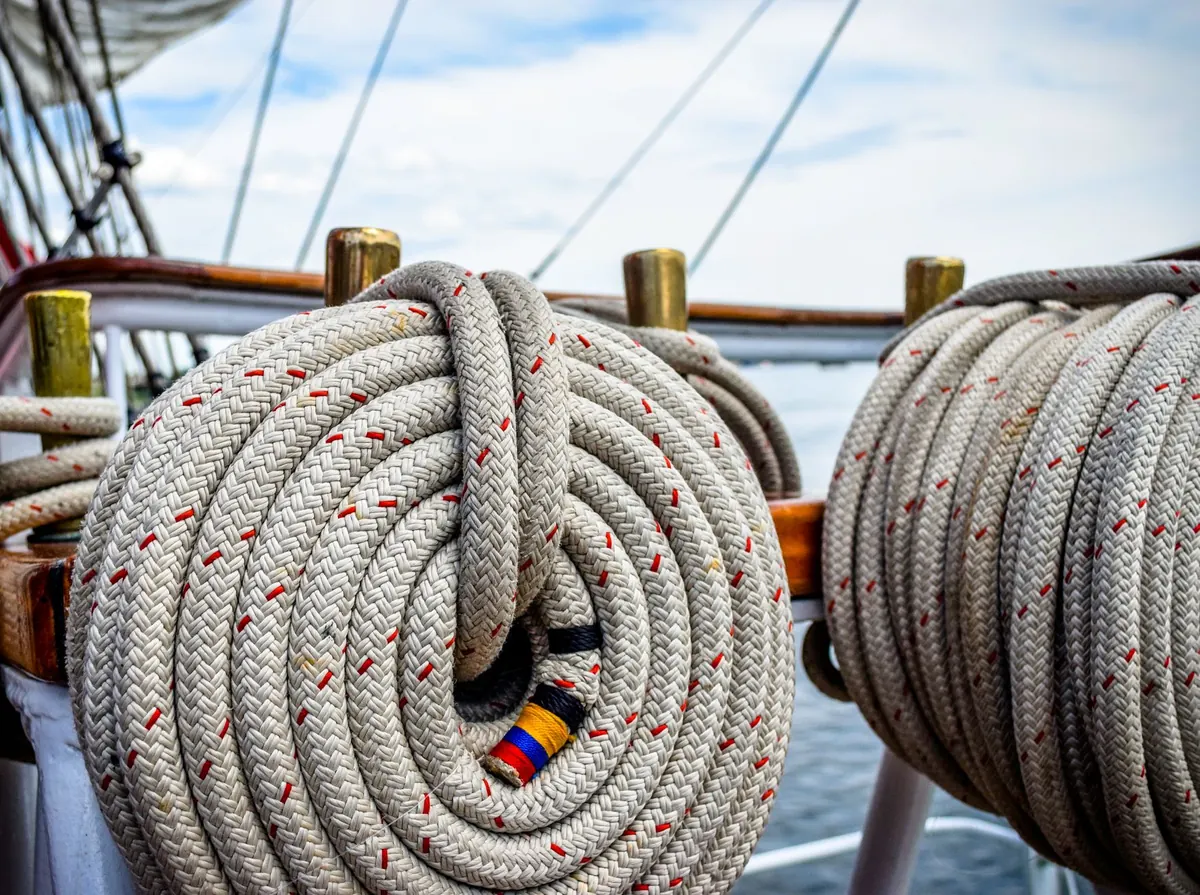
Seven Common Rope Handling Mistakes New Sailors Make (and How to Fix Them)
Rope is one of those things that looks obvious until the wind gets up and someone asks you to take a turn. Nearly every new crew member makes the same handful of mistakes, and nearly all of them are easy to fix. None of them mean you are not cut out for sailing.
The trouble is that habits form quickly in the first few weeks, usually because nobody explains why a particular way of doing something matters. Cleats, winches and coils all have a logic to them, and once you understand the logic, the technique tends to stick. Here are the seven errors that come up most often, and what to do instead.
1. Standing in the bight of a line
A coil of rope on the deck is not just a trip hazard; it is a snare. If a line is under load, or about to come under load, any loop lying on the deck can close around an ankle with enough force to do real damage. Racing crews call this standing in the bight, and it causes some of the most serious injuries in everyday sailing.
The fix is a habit rather than a technique. Keep your feet out of coils, pick lines up cleanly instead of shuffling through them, and never stand on a line that might need to run. Crossing a cockpit full of rope takes half a second longer if you look down first. Do it anyway.
2. Treating a cleat like a hook
Wrapping a line around a cleat two or three times and hoping for the best works on a calm day and fails in a gust. A properly made fast line should hold under load and still come off in one clean movement when you need it.
- Take a full turn around the base of the cleat, starting at the horn the load pulls against.
- Cross over the top in a figure of eight, two or three times, keeping tension on the tail with your other hand.
- Finish with a half hitch so the tail lies alongside the standing part, then give the whole thing a firm tug to settle it.
Two things are worth practising until they are automatic: always take a turn before you take the strain, and always keep your fingers clear of the gap between the line and the cleat. If a line is already loaded, ease it onto the cleat. Don't try to haul it there in one movement.
3. Fighting the winch
A winch multiplies whatever you give it, so give it something sensible. Load a sheet on with two turns and try to haul it by hand and you will either lose skin or lose the line. Lead it properly instead: three turns clockwise around the drum unless your boat is set up the other way, then take the tail in both hands, well back from the drum, and grind.
Keep your thumbs pointing along the line and your fingers away from the drum and the incoming turn. If the boat has self-tailing winches, feed the line into the stripper arm and keep a little tension on the tail so the top turns stay tight. Overriding turns, where one turn buries under another, come from slack, so ease a sheet with a hand on the tail rather than letting it run. When it does happen, take the load off with another line or another winch before you start picking at it.
4. Coiling twists into a line
Braided line dislikes being coiled the same way every time. Loop after loop in the same direction puts a twist into the rope, and the next time it runs through a block it will hockle, jam, and cost you a minute you may not have.
Coil in figure-of-eight loops rather than circles, or flake the line into long, loose loops on deck or into a rope bag. Halyards are better flaked than coiled, because they run out cleanly when a sail needs to come down in a hurry. Finish with a simple hitch that releases with one pull, not a knot that has to be unpicked with cold fingers. And keep tails tidy. A line left snaking across the coachroof will find something to wrap itself around at the worst possible moment.
5. Holding on to a running line
When a line starts moving fast, the instinct is to grab it. That instinct is how people get rope burn; a loaded sheet running through your hands will do damage in less than a second.
What to do instead
- Wear gloves. Sailing gloves are among the cheapest pieces of safety kit on board.
- Give the line to a winch or a cleat rather than to your hands. Two turns on a drum will hold more than you can.
- If you must check a line by hand, let it slide across a flat palm instead of wrapping it around your fingers.
- If it is running, let go and step back. Nothing on deck is worth a hand.
6. Not knowing which line does what
On a strange boat, every line looks the same. New crew often wait to be told, then discover the line they were handed is the one thing that must not be moved. Learn the names before you need them: sheets, halyards, reefing lines, outhaul, kicker, mooring lines and springs. Walk the deck with the skipper and trace each one from its cleat to its sail.
Colour coding, labels and a simple diagram taped inside the companionway all help. So does pointing and naming out loud. It sounds fussy. It also means that when the skipper calls for the jib sheet, the right line appears without a debate.
7. Setting off without a plan
Most line handling goes wrong before anyone touches a rope. Coming into a berth or putting in a reef, the crew need to know who is doing what and what the words mean on this boat. A short brief covers it: who takes the bow line, who tails the winch, what "make fast", "ease" and "let go" mean here, and what happens if the first attempt does not work.
One person, one job, is a good rule, as is doing things in order rather than all at once. Ask your questions before the manoeuvre rather than during it, and if you are unsure what you have been asked to do, say so. Skippers would far rather explain twice than sort out a jammed line in a crosswind.
Practising the basics
None of this needs a rough day at sea to learn. With the boat alongside on a quiet afternoon, you can cleat and uncleat a line until your hands know the shape of it, coil a sheet in figure eights, and put three turns on a winch and grind against a fender. Ten minutes of repetition in flat water is worth an hour of fumbling in a squall.
Gloves on, feet clear of coils, and ask the skipper to watch you make fast a line once and correct you. Small habits like these are what make a crew look calm — and calm crews are the ones that get the boat home without drama.
Photo: Enrique / Pexels
Related Articles